

Military Imprecision
Lethal force in the war of the algorithms

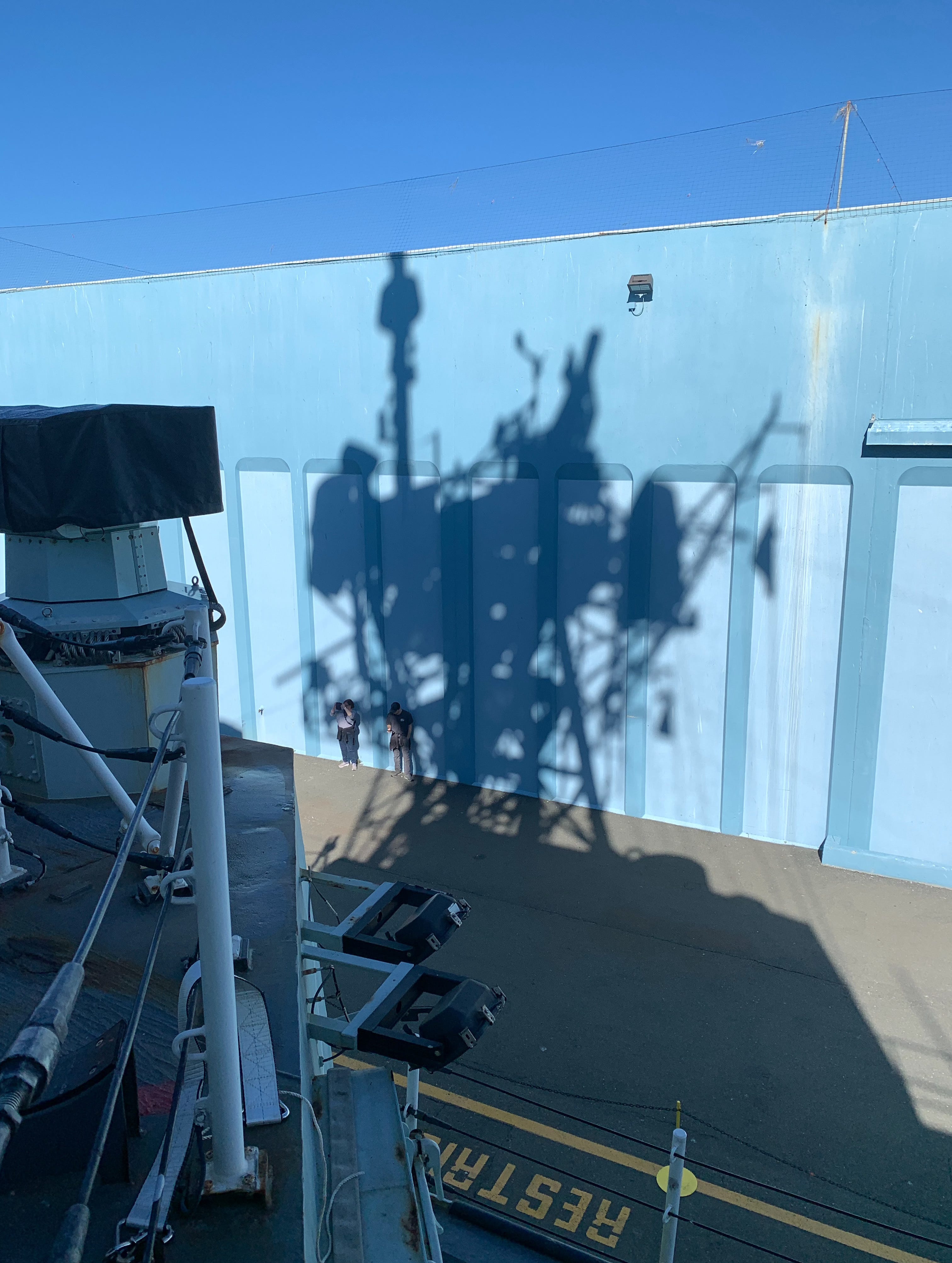
“If we wanted to, we could hit the States from here … 13 miles away.”
The young sailor chuckled as he explained how to load the automated guns aboard His Majesty’s Canadian Ship Vancouver: 250 rounds per minute, computer-controlled but fed by hand five decks below. This old frigate was moored for the weekend at Ogden docks in Victoria where thousands of US tourists typically spill ashore from cruise liners, making a beeline for maple syrup flavoured fudge and chocolate moose droppings.
On this sunny fall Sunday, home-grown crowds lined up to clamber aboard the slightly rusting Canadian navy vessel—a relic of the Cold War, still flying the flag in its dotage. The peeling paint, the rusty deck, the antiquated dials and patchwork cabling spoke of a long life at sea. Here and there, steampunk additions of flat screens, laptops and tablets only served to accentuate the passage of time, modern barnacles on a creature of the deep sea.
We lined up in a chaotic jumble of True North patriots, curious weekenders and wide-eyed pre-teens. Young Canadian Forces recruits struggled to maintain order, overwhelmed by the civilian desire to access the ship before they needed to pee, sit down, sleep or eat, depending on their demographic. Our boarding party remarked that it was hard to see these young recruits dealing with combat stresses given their inability to control a herd of rubberneckers.
More concerning, as we toured the ship itself, was a sense of riveted redundancy. The computer screens had a whiff Windows 95. A top speed of 60km/h seems both impressive, given the tonnage of steel, but also concerning: wouldn’t enemy craft move a lot faster today? It felt like touring a museum exhibit of Renaissance suits of armour.
As we walked the gangplank, I felt truly concerned for the crew and their colleagues, smiling and chatting on the dockside. There are plans to build new ships—faster, more agile, with more tech packed within. Yet these plans seem flimsy in the light of unmanned craft, satellite tracking, AI-enabled targeting systems. They always say that you are preparing of the previous war; in this case, it feels as though we might be preparing for wars that were never fought. Generation Landfill was able to avoid its scheduled generational hot war that would have sharpened lethality on the whetstone of loss.
Instead, we drifted towards UN peacekeeping and limited combat roles as the Robin to the USA’s batman. There’s never been any shortage of bravery and, all too often, sacrifice. Today, in the shadow of new aggression in the world, it’s tempting to ask if we should be more circumspect about the armed forces we create: what’s their real purpose? Are we creating an Arctic porcupine that would be hard to swallow? Or do we see ourselves conducting long-range attacks in Europe and Asia that kill thousands of enemy combatants and destroy tonnes of materiel? It seems as though we have decided on the tools we like before we decided on the execution of the task.
Perhaps the planning is underway right now, deep in the bowels of the Department of Defence. But I wonder if, instead of spending 2% of our GDP on sitting ducks, we should spend more time and energy as a country building decoys. Could we be less predictable than our default Generation Landfill thinking: let’s spend lots of money on stuff to make us feel like we are doing something? Could we confuse and bamboozle our enemies and frenemies with new strategies and tactics that use 100% of your Gross Domestic Brainpower?
The war of the algorithms, when it comes, is surely going to be won by the less predictable side. There is strength in ambiguity.